
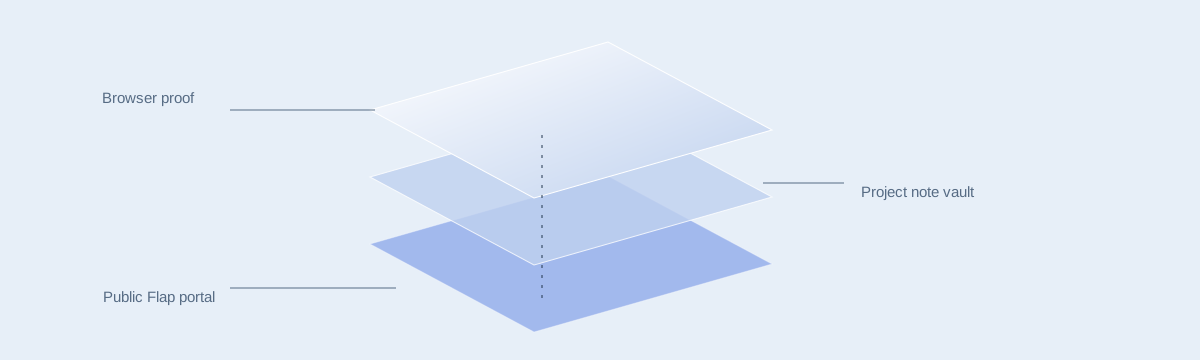
The mechanism,
without the mystery.
Understand what a note proves, what remains public and who controls each layer.
Open tradeA public purchase, a private receipt
The purchase uses BNB as exact input through the Flap portal. A fixed quantity of the resulting tokens is reserved in the project's note vault. Any tokens above that denomination return to the funding wallet.
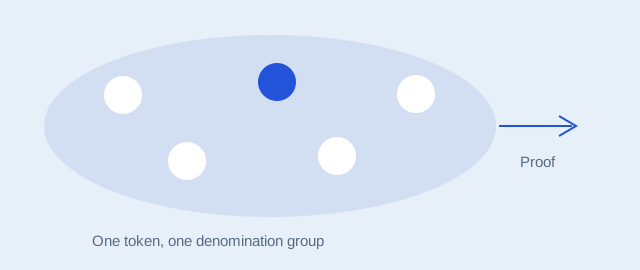
Notes use 1,000,000, 5,000,000 or 25,000,000 whole tokens. Each token and denomination has a separate group. A quote must cover the selected denomination after the applicable route costs.
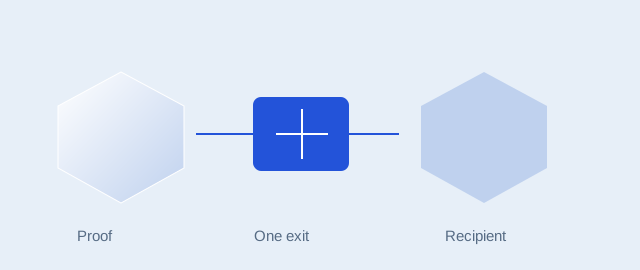
To exit, prove that your note belongs to its group. You can withdraw its reserved tokens to a recipient or sell through the Flap portal for BNB. An exit publishes a spent marker so the note cannot be used twice.
Prove membership, keep the identity
Each note uses a separate random Semaphore identity. Its commitment enters the group. A Semaphore V4 Groth16 proof establishes membership without opening that identity.
The exit proof is bound to the chain, vault, group, action, recipient, submitter fee, minimum output and deadline. A proof for one set of parameters cannot authorize another. The spent marker protects against repeated use.
The browser needs the group's real current membership data and proof resources. A failed read, missing resource or expired deadline stops preparation.
The note is a spending credential
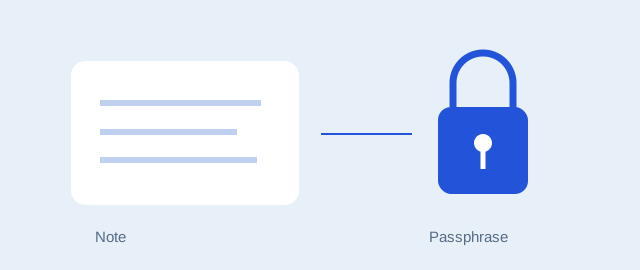
Your private identity stays in your browser while the note is open. The site does not upload the secret or backup passphrase. An encrypted backup uses a local passphrase; keep that passphrase separately from the file.
Anyone holding the decrypted note may be able to spend it. Losing every copy can remove the inputs needed for an exit. The site's interface cannot reconstruct your secret.
Save the backup before submitting a purchase. Keep it until the transaction receipt and resulting vault state have been verified. Clearing this tab removes its open note; it does not cancel a chain transaction.
Privacy has observable edges
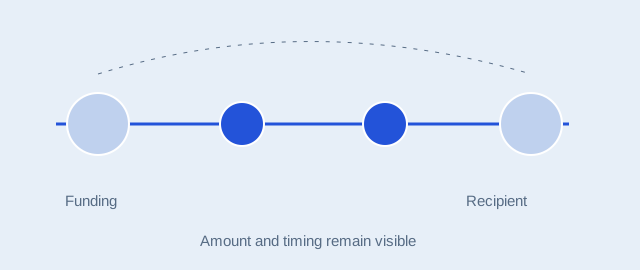
Funding and exit transactions remain public. The token, denomination, transaction value and timing can connect activity. A small group offers fewer plausible alternatives. Token change returned to the funding wallet can reveal additional information.
Submitting an exit from the funding wallet can create a direct link. You can copy the prepared public request for another wallet to submit. This site provides no hosted relayer, and another submitting wallet does not guarantee unlinkability.
Browser extensions, a compromised device, shared backups or public launch metadata may reveal identity. The mechanism does not conceal network traffic or guarantee complete anonymity.
Who controls what
The project uses its own note vault and tax treasury. The configured project dev has direct administration paths. This project setup does not assign a Flap Guardian role to those components.
New deposits can be paused or closed. Existing note holders retain the withdrawal path. A close operation cannot erase unspent-note liabilities.
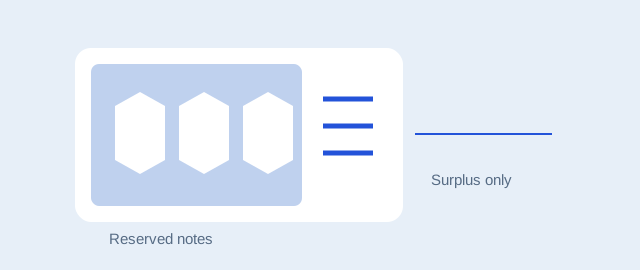
Vault rescue is limited to surplus. Tokens reserved for outstanding notes stay inside the liability boundary. Rescue uses the configured project dev recipient, rather than a caller-selected address.
The project tax treasury is upgradeable by its configured administrator. The note vault uses fixed dev, verifier and portal addresses in its current implementation. That authority can change future implementation behavior. Verify the exact deployment addresses, ownership and upgrade roles before using a released configuration.
The Flap portal has its own platform administration. Its platform role can change a token's marketing wallet. This is a portal permission and is separate from the project's note-vault roles.
Launch through the public portal
Launch preparation uses Flap's TOKEN_TAXED_V3 route. The name, symbol, metadata and initial BNB buy are visible in the prepared request and chain history.
Tax rates, recipients and distribution settings are derived from the confirmed project configuration. The interface does not choose a replacement wallet or import another project's economics.
The private note layer applies to supported purchases after the token route is validated. There is no additional wallet holding-cap promise, permanent-lock promise or automatic sell service.
Read the actual configuration
Addresses below are read from the same-origin configuration endpoint. A dash means no address was returned. A transaction is enabled only when every required component and launch setting is present.
- Chain
- BNB Chain · 56
- Portal
- —
- Project dev
- —
- Tax treasury
- —
- Note vault
- —
- Proof verifier
- —
- First indexed block
- —
Reading configuration.
What happens on a failed read?
The interface shows the failed source and stops dependent actions. It does not replace missing balances, supplies or fees with zero.
What does wallet connection authorize?
Connection requests your public account. It does not sign a message, submit a transaction or grant a token allowance. Each signing request needs a separate deliberate action.
What can a prepared request reveal?
It includes public transaction parameters and a proof. It does not include the private identity or backup passphrase. Verify the recipient, amount, target and deadline before sharing or submitting it.